
The Blog

Why Fun Is the Most Underrated Fitness Strategy
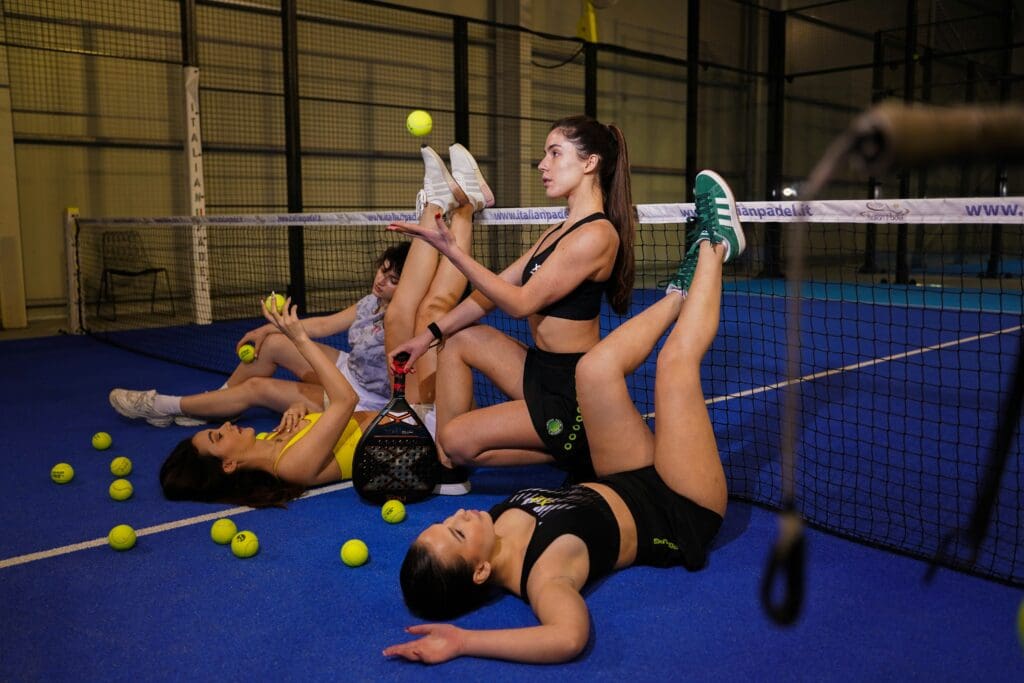
We’ve spent years being told that a good fitness strategy means discipline. This is an argument for something far more powerful – and far more fun.
The Run That Reminded Me
After my first child, I threw myself into building something.
I’d gone self-employed so I could be flexible – present for the kids, in control of my time, doing something that felt like mine. And I gave it everything. Every waking hour that wasn’t taken up by a baby went into that work. The ambition, the drive, the capacity to push hard at something – I’d always had those things, and now I’d found a new place to pour them.
And slowly, without quite noticing, I hollowed out.
My head was scattered. My energy was gone. I couldn’t think clearly. I was doing all the things that were supposed to make life work and something important had quietly stopped working underneath all of it.
Then one day, almost without deciding to, I went for a run.
I don’t remember it being long or impressive. I just remember how I felt when I came back. Clear-headed in a way I hadn’t been in months. Like I’d shaken something loose. Like I could think again. And underneath all of that – quietly, almost shyly – like myself.
I hadn’t lost my fitness. I’d lost touch with what movement had always actually been doing for me. And it had nothing to do with performance or how I looked or whether I was hitting any particular standard. It was cognitive. Emotional. Identity-level.
It was joy, in the most unglamorous, unphotographed, no-audience sense of the word.
And that run started me thinking about something I’ve been thinking about ever since.
What We Get Wrong About Exercise
If you spend any time in the world of fitness advice, you’ll notice that most of it revolves around discipline.
Willpower. Mental toughness. Pushing through. The implicit message that if you’re not exercising consistently, the problem is your character – your softness, your lack of commitment, your failure to want it badly enough.
I spent years half-believing that. I’ve always loved being active, but if I’m honest about the undertones, a lot of it was driven by the wrong things. Achievement. Aesthetics. Performance. The quiet pressure to be the kind of person who had this sorted. And that approach worked – until it started to cost more than it gave.
Here’s what I’ve come to understand since: the people who stay active for years are almost never the most disciplined ones. They’re the ones who genuinely enjoy it.
Not every session. Not every mile. But fundamentally, at the level of identity – movement feels like something they want rather than something they endure.
And that distinction is everything.
Why Enjoyment Isn’t a Bonus – It’s the Point
When you enjoy something, a specific thing happens in the brain.
The activity stops being processed as effort and starts being processed as reward. You stop needing to overcome resistance to begin, because the anticipation itself feels good. The run you were dreading becomes the run you find yourself looking forward to, almost despite yourself.
Psychologists who study long-term behaviour change have a framework for this – it’s called Self-Determination Theory, and it suggests that we sustain behaviours when three things are present: the sense that we’re choosing the activity freely rather than being forced into it, the feeling that we’re capable and improving, and a sense of connection – to other people, or to something that feels meaningful.
When exercise feels like punishment, none of those things exist. When it feels enjoyable, all three tend to follow naturally.
So when you feel that familiar resistance – the negotiating, the procrastinating, the telling yourself you’ll go tomorrow – that’s often not laziness. It’s your brain responding to something that has stopped feeling rewarding. And the solution isn’t to try harder. It’s to ask why it stopped feeling good.
What Motherhood Taught Me About This
I want to say something about weight and aesthetics, because I think it’s important to be honest rather than pretend it’s a simple conversation.
There was a period of my life where losing weight was part of why I exercised. After having children, I made efforts to do that, and it worked. I’m not standing here telling anyone they’re wrong to care about how they look or to want those things for themselves – I’ve wanted them too, and I understand why.
But what motherhood stripped back, gradually and without much ceremony, was the ability to sustain exercise for aesthetic reasons alone.
Because in motherhood, you don’t have energy to spare on things that don’t actually give you something back. The cost-benefit calculation tightens dramatically. And what I discovered when I finally went back to running – properly, for myself, not for anyone else’s version of what my body should look like – was that what movement gave me was so much more useful than what I’d been chasing before.
Clarity. Space. Mood. The sense that my body was capable of hard things. The quiet but powerful experience of doing something just because I wanted to.
It’s easier to say this now because I’m in a different place – I know that. But the shift wasn’t really about where I’d arrived physically. It was about understanding what movement was actually doing for me, cognitively and emotionally. Once I understood that, going back for aesthetic reasons alone would have felt like spending gold on something you could have had for free.
Children Already Know This
Watch a child move and you’ll see exactly what most adults have been trained out of.
They run because it feels good. They climb because it’s interesting. They race each other across the grass with no productivity goal, no calorie target, no performance benchmark. Movement is just something their bodies enjoy doing – and so they do it, endlessly, with a kind of absorption that adults spend years trying to manufacture through discipline.
We don’t need to manufacture it. We need to remember it.
What did you love doing as a child? What made your body feel alive rather than just functional? There’s usually a version of that available to you as an adult – maybe not identical, but close enough to tap the same feeling. Not the exercise that gives you the best results on paper. The one that makes you want to come back.
Adult soft play, anyone?
The Practical Upside Nobody Talks About Enough
There’s another reason enjoyment matters beyond just feeling good in the moment.
When the majority of your movement feels genuinely rewarding, it becomes much easier to include the parts that don’t.
I’ll be honest: I don’t love strength work. I’m a runner. Given the choice, I will always choose to be outside moving through the world over being inside lifting things. But I do the strength sessions because they protect the running – they mean fewer injuries, better resilience, more years of being able to do the thing I actually love.
If running felt like punishment, I’d never sustain the strength work alongside it. But because running is the thing I come back to because I want to, the practical maintenance work becomes something I do to protect that joy rather than a second burden on top of the first.
Fun creates the foundation. The rest sits on top of it.
What Happens When Exercise Stops Being Fun
There’s a very recognisable pattern that happens when movement stops feeling enjoyable.
You start negotiating with yourself. The reasons not to go multiply. The sessions feel heavier before they start. You begin associating exercise with obligation rather than relief, and somewhere in that shift the whole thing starts to feel like one more demand on a life that already has too many.
This is what psychologists sometimes call behavioural friction – the resistance that builds around something the brain has started to associate with discomfort. And once it builds, discipline alone rarely dissolves it. You can white-knuckle your way through a few sessions, but you can’t white-knuckle your way into a decade of consistent movement.
The question worth asking – when exercise starts to feel heavy – isn’t “how do I push through this?” It’s “what would make this feel enjoyable again?”
Sometimes it’s as simple as a new route, a different time of day, someone to run with, music you’ve been saving. Sometimes it’s bigger – letting go of the pace you thought you should be running, or the format you thought counted as a real workout. Giving yourself permission to move in whatever way actually feels good, and trusting that something that feels good will hold in a way that something punishing simply won’t.
The 10 low-key ways to make running fun again post is worth reading alongside this if it’s the running specifically that’s started to feel heavy.
A Life Built Around Movement You Love
The women I know who have been consistently active for years – through pregnancies, small children, career changes, every disruption life throws – aren’t the most disciplined ones. They’re the ones who found a version of movement that genuinely adds something to their lives rather than taking from them.
Some of them run. Some of them walk, swim, cycle, dance, do classes they love, play sport, move with their children in ways that count. The form varies. The feeling underneath it is the same: movement as something chosen, something wanted, something that makes the rest of life work better.
That’s what I’m building this brand around. Not a programme or a transformation. Not a fitness identity built on suffering through something you hate.
Just the radical, consistently underestimated idea that when you actually enjoy the way you move, everything else – the consistency, the confidence, the way your days feel – tends to follow.
So if you’re trying to build a more active life, maybe the most useful question isn’t how to force yourself to do more.
Maybe it’s simply: how do I make this feel worth coming back to?
Because when movement feels good, you come back. And the things you come back to, over and over, across years and seasons and all the unpredictable chaos of real life?
Those are the things that shape who you are.
Do fun shit.
Come and Talk About This
This is one of the things I’m most passionate about – and it’s exactly the kind of conversation that happens inside the Active Happy Mum Club.
Join the Active Happy Mum Club on Facebook →
Or find me on Instagram @activehappymumlife.
FAQs: Fun, Enjoyment and Exercise Motivation
Q: Why do I keep losing motivation to exercise? Usually because the activity has stopped feeling rewarding and started feeling like obligation. When that shift happens, discipline alone rarely sustains it – you can push through for a while, but the resistance tends to grow rather than shrink. The more useful question is what made it feel less enjoyable, and what would change that. A new environment, a different format, someone to do it with, or simply giving yourself permission to move in a way that actually feels good rather than a way that looks correct on paper – any of these can shift the dynamic more effectively than trying harder.
Q: Is it okay to exercise just because it’s fun, not for fitness goals? Not only okay – arguably the most sustainable approach there is. The research on long-term exercise adherence consistently points to enjoyment as one of the strongest predictors of whether someone keeps moving over time. Goals are useful for direction, but enjoyment is what gets you out the door on the unremarkable Tuesday when there’s no race to train for and no particular milestone to chase. A life built around movement you genuinely enjoy tends to produce better long-term outcomes – physical and mental – than one built around grinding through something you hate.
Q: How do I make exercise fun again when it’s started to feel like a chore? Start by lowering the bar for what counts. One of the most common reasons exercise stops being enjoyable is that we’ve attached too many conditions to what makes a session “proper” – the right duration, the right pace, the right format. Removing those conditions and just moving in whatever way actually feels good that day tends to reconnect you with the intrinsic enjoyment faster than any structured approach. New routes, music you love, company, a completely different activity – small changes to the context can shift the emotional experience significantly. The 10 low-key ways to make running fun again has specific ideas if it’s running that’s gone stale.
Q: I used to love exercise but since having kids I dread it. Is that normal? Very common, and worth understanding rather than pushing through. Postpartum life changes your relationship with your body, your energy, your time, and your sense of what movement is for. What worked before – the intensity, the format, the reasons behind it – often doesn’t translate directly. The version of exercise that works in this season of life usually looks different to what came before: softer, more flexible, more connected to how it makes you feel rather than what it produces. That’s not a step backwards. It’s a recalibration. Many women find that the version of movement they build in motherhood is actually more sustainable and more joyful than anything that came before it.
Q: What if the exercise I find fun isn’t “proper” exercise? There’s no such thing as exercise that doesn’t count. Walking counts. Dancing in the kitchen counts. Chasing your kids around the park counts. The idea that only structured, intense, sweat-producing sessions are legitimate is a fitness industry invention, not a physiological fact. What matters, for both physical and mental health, is that movement is present and consistent in your life – and the most reliable way to make that happen is to do things you actually enjoy. The format is secondary. The consistency is everything.
Read Next
10 Low-Key Ways to Make Running Fun Again
Why You Can’t Stick to Running (And What’s Actually Going On)
Why You Feel Better After a Run (The Psychology Explained)


Be the first to comment