
The Blog

10 Low-Key Ways to Make Running Fun Again
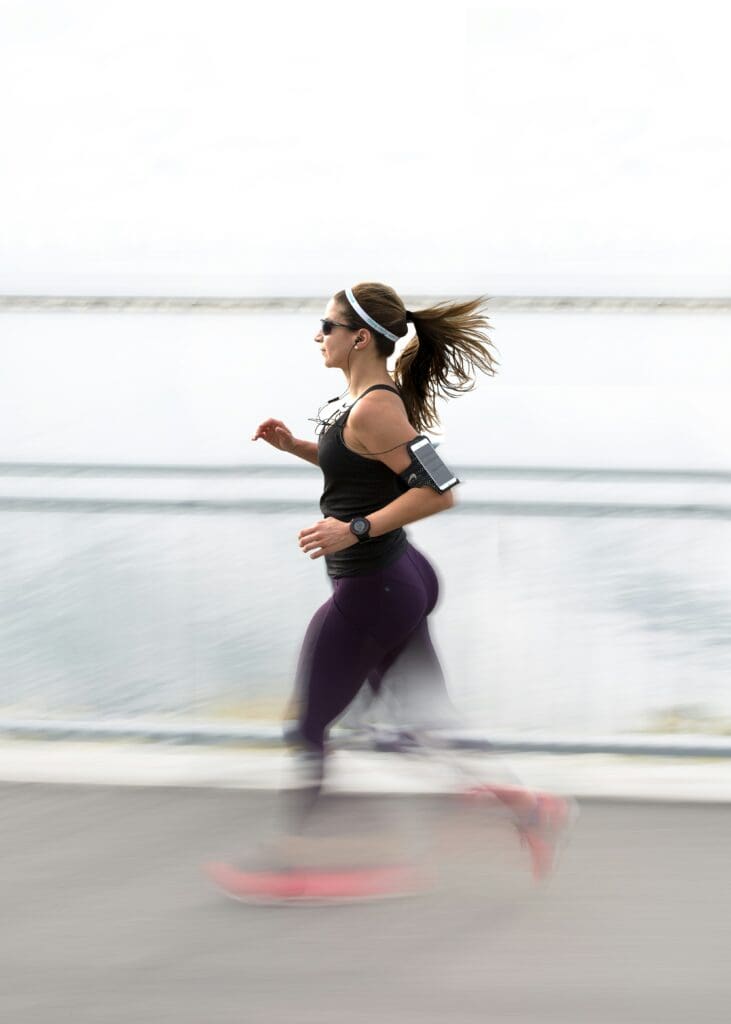
Running stopped being fun somewhere along the way. Here’s how to get that feeling back – without overhauling everything.
“Are we done yet?”
That’s what I asked myself, approximately seventeen times, on a run last year. Not out loud. Just that small, deflated internal voice that appears when the thing you’re supposed to love has quietly started to feel like a chore.
If you’ve ever been there – and most consistent runners have – you know the specific flatness of it. Not injury, not exhaustion, just a kind of grey indifference toward something that used to feel genuinely good.
The answer is almost never to push harder. It’s to make it more enjoyable. And there are more ways to do that than most people realise – none of them requiring a new training programme or a significant personality overhaul.
Here are ten of them.
1. Run Somewhere New
The quickest fix on this list, and often the most effective.
Familiarity is the enemy of enjoyment. When you’ve run the same loop enough times that your brain processes it on autopilot, you stop experiencing it – you’re just doing it. A new route demands a different kind of attention. You’re looking around, noticing things, actually present in the run rather than waiting for it to end.
It doesn’t have to be far. A different street, a nearby park you’ve never tried, a trail instead of a pavement. Even a familiar route run in reverse can shift the experience enough to make it feel like something different.
This works because novelty engages the brain’s reward system in a way that repetition doesn’t – it’s part of why psychologists studying motivation talk about autonomy and variety as core drivers of sustained enjoyment. When something feels chosen and fresh rather than obligatory and stale, the experience of doing it changes. New route, same legs, completely different run.
2. Get a Running Buddy
This one changes everything, and I don’t say that lightly.
There is a specific quality of conversation that happens on a run that doesn’t happen anywhere else. Side by side, both breathing, covering ground together – it’s a different register to sitting across a table. Things get said that wouldn’t get said otherwise. Silences are comfortable in a way they aren’t when you’re stationary.
And practically: when someone is expecting you, the internal negotiation about whether to go simply doesn’t happen. You’ve committed. You’re going.
The challenge, as every active mum knows, is finding the right person. Someone who actually shows up. Someone who doesn’t need their arm twisted. Someone who suggests things back. If you’re still looking, the Active Happy Mum Club is built around exactly this – women who are already out there, no convincing required.
3. Sign Up for Something
Nothing makes a Tuesday morning run feel purposeful like a race sitting on the calendar.
It doesn’t have to be big. A local 5K, a parkrun you want to feel good at, a colour run, a charity event, a fancy dress 10K where the costume is most of the fun. What matters is that it gives the individual sessions a reason to exist beyond “I should exercise.”
When there’s something to work toward, the motivation maths changes. The question stops being “do I feel like running today?” and becomes “I have six weeks and I want to be ready.” That’s a completely different internal conversation, and it tends to win more often.
The first time I signed up for something with no real expectation of performance – just curiosity about whether I could do it – was the beginning of a very different relationship with running. There’s always a next thing. There’s always a reason to keep going.
4. Join a Running Group or Club
Running with other people changes the atmosphere of the whole thing.
There’s something that happens in a group that’s greater than the sum of its parts – a shared energy, a collective momentum that carries individuals through the parts they’d have quit on alone. Psychologists call this social facilitation – the way performance and enjoyment both tend to improve in the presence of others who are doing the same thing. You run slightly longer, slightly more easily, with slightly more goodwill toward the whole endeavour, because you’re not doing it alone.
Running groups vary enormously in feel and focus – some are pace-driven, some are entirely social, most are somewhere in between. The running groups near you post covers how to find and choose one that actually fits your life.
5. Get a Good Playlist
I am absolutely that person.
The one with a carefully curated playlist that has been built over years and updated compulsively and takes running far more seriously as a soundtrack experience than is probably necessary. My marathon playlist exists. It is a work of art. You can find it here if you want to either use it or judge it, both are valid.
What you listen to on a run matters more than people admit. Music affects pace, mood, and perceived effort – research on exercise and music consistently finds that the right playlist reduces the experience of how hard something feels, which means you can run further and enjoy it more without trying harder. Podcasts and audiobooks are a reasonable alternative if music isn’t your thing – many women save their favourite episodes specifically for runs, which makes the run something to look forward to rather than something to get through.
The run becomes the treat delivery system. This is a legitimate strategy.
6. Take the Pressure Off the Pace
This one is possibly the most liberating thing on this list.
If you’ve been running with Strava or a GPS watch, try running without it. Just go. No data, no splits, no post-run analysis of whether you were faster or slower than last time.
What happens, for most people, is that the run becomes an experience rather than a performance. You notice things. You adjust naturally to how your body feels rather than chasing a number. You finish feeling like you went for a run rather than like you sat an exam.
The data is useful when you’re training for something specific. But when running has started to feel heavy, removing the measurement removes a layer of pressure you might not have realised was there. Runs without a target are often the ones that remind you why you started.
7. Celebrate Small Wins
This one sounds small and is actually significant.
Every time you run when you didn’t have to – every session that happened in a difficult window, every run that got done despite the weather or the tiredness or the very convincing reasons not to bother – that is an achievement worth acknowledging.
Not in a performative way. Not in a “well done me” Instagram caption way. Just internally, privately, noting that you did the thing. That you showed up. That you are someone who does this.
Psychologists call these mastery experiences – small, completed moments of doing something difficult – and they are one of the most reliable mechanisms for building both confidence and sustained motivation. When you celebrate the attempt rather than only the impressive outcome, you start reinforcing the identity of a runner rather than waiting to deserve it. Every run counts. Every one. Even the slow ones, even the short ones, even the ones that felt terrible from start to finish.
8. Run With Your Partner
Or don’t. Depending on your partner.
My partner runs faster than me and occasionally, when we run together, makes the tactical error of running slightly ahead. This is a choice I find deeply irritating and have made clear on multiple occasions. Mainly because he tires of my incessant cheeriness and runs ahead to escape me!
But when it works – when the pace is genuinely shared and nobody is performing or competing or checking their watch while the other person is still catching up – running together is one of the nicest things you can do. No screens, no logistics, just movement and conversation and the particular intimacy of doing something physical side by side. It’s enabled us to have some time away from the kids together, to go to races and stay away and have some real downtime all at once.
It also helps with protecting your own time. I have to say it – my training slots have never been easier to uphold since my partner found out he also needed to train for London this year!
9. Run With Your Kids
A running buggy changes the equation entirely for mums with young children.
It removes the childcare calculation – no negotiating a window, no coordinating around naps, no owing anyone a favour. You just go. The kids come. Movement happens.
It takes a bit of adjustment to the running style – you’re pushing weight, your arms aren’t free, the pace is different. But many mums find that buggy running becomes one of their favourite versions of the thing, precisely because it’s so completely integrated into daily life rather than stolen from it. (A full post on buggy running is coming to the site – link to be added when published.)
Older kids can join on bikes alongside you. Some of the best family runs I’ve done have involved a six-year-old on a balance bike covering approximately twice the distance at half the pace, completely absorbed in something only she could see. My 5-year-old also runs with me for my warm ups now before I drop her home to continue my run. That also works for us, but does depend on when you do it.
10. Enter a Race for the Experience, Not the Time
Go somewhere new. Run somewhere beautiful. Pick a race because of where it is rather than what time you want to run it in.
A race abroad, a trail run in the hills, a city race somewhere you’ve always wanted to go. The run becomes the excuse for the adventure. The training becomes preparation for something you actually want to do rather than a number you want to hit.
This is where running and travel intersect in the way I find most compelling – movement as a way of inhabiting a place rather than just visiting it. The active mum’s guide to seeing the world goes into this properly if it’s sparking something.
My London Marathon wasn’t about the time. It was about everything else – the city, the people, the conversation someone had with me on the route about running rather than about the kids, the particular feeling of crossing a finish line that belongs entirely to you. Sign up for something that gives you that, and the fun tends to take care of itself.
Come and Make It More Fun Together
Running is better with the right people. The Active Happy Mum Club is where we find each other.
Local runs, shared plans, honest conversation about what actually makes this work in real mum life.
Join the Active Happy Mum Club on Facebook →
Or find me on Instagram @activehappymumlife.
FAQs: Making Running Fun Again
Q: How do I make running more enjoyable when it feels like a chore? The most reliable fixes are the simplest ones: a new route, someone to run with, something on the calendar to work toward. When running starts to feel like a chore it usually means the conditions around it have gone stale rather than the running itself. Changing the environment, the company, or the purpose tends to shift the experience more effectively than trying to manufacture more motivation for the same thing.
Q: Is it okay to run slowly just for fun? Not only okay – often the best thing you can do. Slow running is still running. It still produces all the neurochemical and psychological benefits. It still counts. And runs done at a genuinely comfortable pace – where you can hold a conversation, where you finish feeling better rather than depleted – are the ones that build the sustainable habit. The pace obsession is one of the most common reasons running stops being enjoyable. Removing it tends to bring the fun back faster than anything else.
Q: What music is good for running? Whatever makes you want to move. Genuinely. The research on music and exercise suggests that tempo matters – music around 120–140 BPM tends to match natural running cadence and reduce perceived effort – but more than anything, music that you love and that gives you energy is the right answer. If you want a starting point, my marathon playlist is here. Build from there or ignore it entirely and make your own.
Q: How do I make running fun with kids around? A running buggy is the most practical solution for young children – it integrates the run into daily life rather than requiring you to create a separate window for it. Older children can join on bikes or scooters. Some of the most enjoyable runs happen with a small person alongside you who has no concept of pace and is entirely absorbed in whatever they’ve spotted in a hedge. It won’t look like your training runs. It will probably be more fun.
Q: Why did I used to love running and now I don’t? Usually because something about the conditions changed – the reasons behind it, the pressure attached to it, the format it’s taken, the company (or lack of it). Running rarely stops being enjoyable because of running itself. It stops being enjoyable because of what’s been layered on top of it – performance expectations, obligation, the feeling that it has to look a certain way to count. Stripping those layers back and returning to the simplest version – going outside and moving because it feels good – tends to bring the enjoyment back. The why fun is the most underrated fitness strategy post explores the deeper version of this if it’s resonating.
Read Next
Why Fun Is the Most Underrated Fitness Strategy
How to Start Running Again After Kids
Running Groups Near You: How to Find One That Fits


Be the first to comment