
The Blog

The Active Mum’s Guide to Seeing the World Without Giving Up Movement
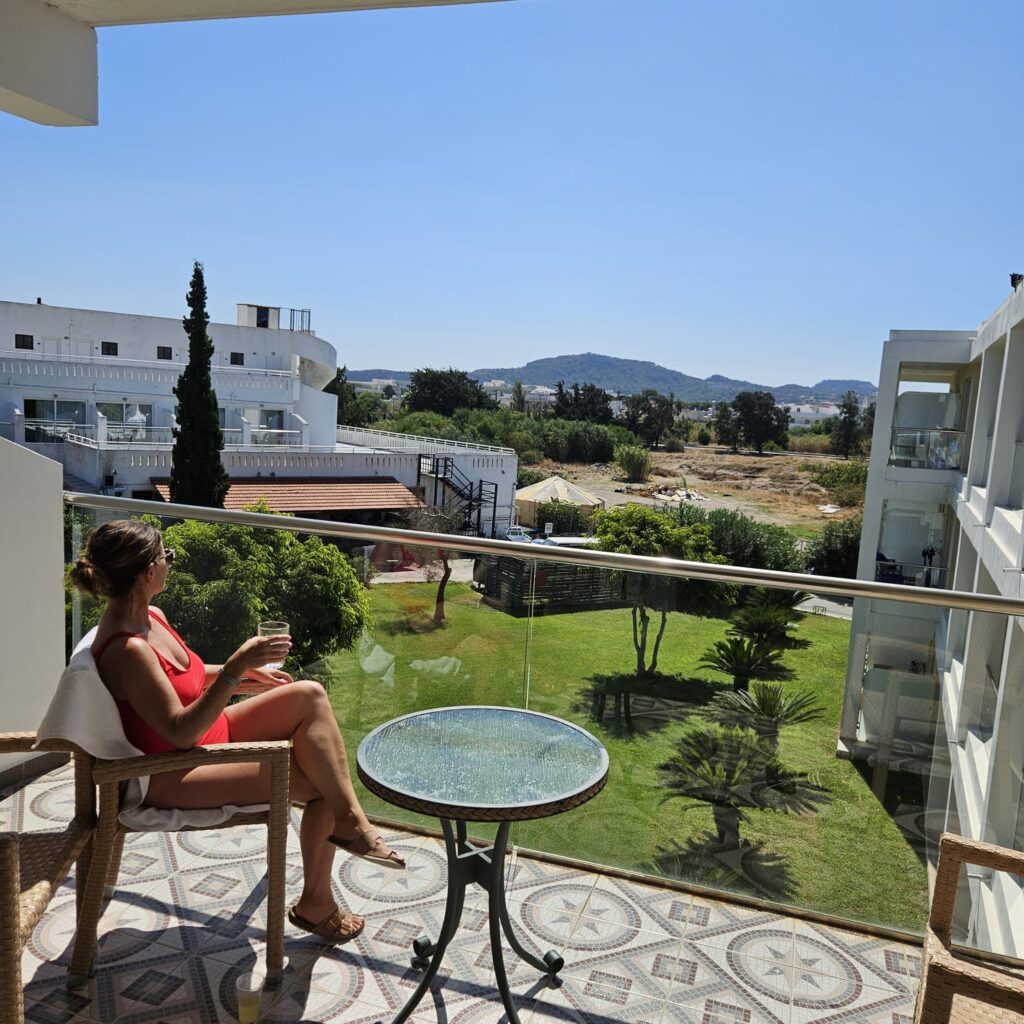
Active travel doesn’t mean a wellness retreat or a rigidly scheduled training block. It means staying connected to movement in whatever way fits the trip you’re actually on.
There’s a moment when you’re packing for a holiday where the question always appears.
Do I bring the running shoes?
It sounds like a small decision. But if movement has become part of how you live – not as a discipline, not as a performance, but as something that genuinely makes your days feel better – then it suddenly feels bigger than that.
Because what you’re really asking isn’t “do I pack the trainers.” You’re asking: do I get to stay myself on this trip, or does travel mean putting that version of me away for a fortnight?
The answer, in my experience, is that you don’t have to choose. But you do have to be intentional about it – not in a rigid, scheduled, nothing-gets-in-the-way kind of way. In a quiet, this-is-just-how-I-travel kind of way.
This is the guide I wish someone had handed me before I figured it out the long way round.
First – A Note on Wellness Travel
The wellness industry would have you believe that staying active while travelling means a green juice at sunrise, a breathwork session, and a retreat that costs the same as a small car.
And I want to say something clearly: that’s not what this is.
When did wellness become so expensive, so curated, and so completely disconnected from how most women actually live? The version being sold – optimised, perfectly photographed, available only to those with significant disposable income and no school pick-up – has very little to do with what actually makes people feel well.
What most mums actually need from travel isn’t transformation. It’s continuation. Staying connected to the things that make daily life feel manageable – fresh air, movement, time that’s yours – in a different place, at a different pace.
That’s it. That’s the whole brief.
Why Movement Makes Travel Better (Not Harder)
There’s a reason a run before breakfast on holiday feels different to the same run at home.
It’s partly the novelty – new streets, new air, different light, the particular quiet of somewhere unfamiliar before it wakes up. Novel environments genuinely stimulate the brain differently, and that stimulation is restorative in a way that familiar routes aren’t. Research on green exercise – including a meta-analysis by Barton and Pretty (2010) examining over 1,200 participants – found that exercise in natural environments improves mood and self-esteem significantly, with effects present from as little as five minutes.
But beyond the research, there’s a simpler truth: movement gives you the place.
A run through unfamiliar streets shows you things you wouldn’t have seen from a sun lounger. An early morning walk before the family is up gives you the city before it belongs to anyone else. Swimming in the sea before breakfast makes the whole day feel different.
You’re not just visiting the place. You’re inhabiting it.
What Gets in the Way (And How to Not Let It)
The most common reason active mums don’t run on holiday isn’t laziness. It’s friction.
You don’t know the area. You’re out of routine. The day isn’t structured the same way. There are people around, or kids to think about, or things already planned.
And something that normally feels effortless starts to feel like effort. So it quietly drops.
The fix is almost always to reduce the friction before you arrive, not to rely on motivation once you’re there.
Know roughly where you’re going before you leave. A two-minute Google Maps check – is there a seafront path, a park, a quiet road near the hotel? – means you’re not standing outside in your kit trying to make a decision at 6:30am. That decision is where it usually falls apart.
Pack one set of kit and commit to it. Multiple options create multiple decisions. One set, rinsed after each use, removes all of it. You put it on and go.
Give yourself a starting point, not a plan. The goal isn’t to replicate your training schedule. It’s to go out the door. Five minutes, ten minutes, thirty – doesn’t matter. The run that happens is infinitely more useful than the perfect run that didn’t.
Making It Work With Kids
This is where most mums write it off entirely. And it doesn’t have to stop – it just looks different.
Early mornings are the most reliable window, before the family day has started and before the heat builds. Even on trips where I haven’t had a completely free morning, I’ve managed something in that window by keeping it short and removing the expectation that it needs to be a proper session.
Alternating with a partner is the other approach that actually holds up – one of you goes, one of you stays, then you swap. Agreeing this before you travel (rather than trying to negotiate it on the day) is what makes it work.
A running buggy is worth knowing about if your children are young enough – it folds down small enough for most airline child allowances and removes the childcare equation entirely. There’s a dedicated post on buggy running coming to the site that covers the practicalities.
And sometimes, you involve the kids. A family bike ride, a walk that becomes a gentle run, exploring somewhere on foot rather than by taxi. It won’t look like training. But it keeps movement woven into the trip rather than separate from it.
The Trips Worth Seeking Out
There’s been a genuine shift in how family travel is structured, and it’s worth knowing about.
More destinations and travel operators now build active experiences into the offering as standard – resorts with running routes, family cycling, guided walks, watersports, ski and activity holidays that move beyond the all-inclusive template. You don’t have to engineer the activity into a passive trip anymore. You can simply choose a trip where it’s already there.
This is the territory I work in through my travel company, Active Happy Travel – helping active families find trips that fit the kind of life they actually want to be living, rather than trips they have to adapt around. The site is in its early stages, but if active family travel is something you want more of, it’s worth keeping an eye on.
The point isn’t that every holiday has to be an adventure. It’s that there are more options than the standard all-inclusive, and some of them are specifically built for women and families who want to move through the world rather than just sit still in it.
Movement-Friendly Travel in Practice
When you strip it back, staying active while travelling doesn’t require a plan. It requires a small number of defaults that make movement easy enough to happen naturally.
Go somewhere with outdoor space. Pack the shoes. Get out before the day starts. Walk where you’d otherwise take a taxi. Choose the beach over the pool occasionally, the trail over the road, the city on foot over the city from a bus.
These aren’t sacrifices. They’re just choices that compound over a week into a trip that feels more immersive, more energised, and more yours.
The goal isn’t to maintain your peak training block while you’re away. It’s to come home having stayed connected to the version of yourself that moves through the world rather than watching it go by.
A Final Thought
Travel has always had the power to expand your life.
Movement simply deepens that expansion. It turns observation into participation. It makes the place feel like something you experienced rather than something you witnessed.
So when you’re packing and the question comes up again – do I bring the running shoes? – you already know the answer.
Come and Talk About This
Inside the Active Happy Mum Club, active travel is one of the things we plan and dream about together – sharing routes, recommending destinations, organising trips for women who want to move through the world.
Join the Active Happy Mum Club on Facebook →
Or find me on Instagram @activehappymumlife.
And if you’re looking for help planning an active family trip, Active Happy Travel is where that work happens.
FAQs: Active Family Travel
Q: How do I stay active on a family holiday without it taking over the trip? The key is making movement low-friction rather than high-effort. Early mornings before the family day starts, one set of kit that’s always ready, a rough idea of where to run before you arrive. When it’s easy it happens. When it requires planning on the day, it usually doesn’t. The goal isn’t to maintain a training schedule – it’s to stay connected to movement in whatever small form fits the trip.
Q: What are the best types of holidays for active mums and families? The trips that tend to work best are ones where activity is built into the structure rather than something you have to engineer. Coastal destinations with seafront paths, mountain or countryside resorts with walking and cycling, activity-focused operators who include movement as part of the experience. The shift away from purely passive all-inclusive travel is real and there are genuinely good options now for families who want to explore more and sit still less. Active Happy Travel is where I’m building that curation.
Q: Is it realistic to keep running on a family holiday? Completely – but it looks different to running at home, and accepting that early removes a lot of frustration. Early mornings, shorter distances, different routes, occasionally involving the kids. The run that happens imperfectly is always better than the perfect run that didn’t happen. Most people who successfully run on holiday have one thing in common: they lowered the bar for what the run needed to look like, and then went anyway.
Q: My partner doesn’t run – how do I make space for it without it becoming a source of tension? Agreeing it in advance rather than negotiating on the day makes an enormous difference. “I’d like to get out for a run a few mornings – can we figure out when works?” before you travel is a completely different conversation to “I want to go for a run now” when everyone is already into their day. Most partners are more supportive than the on-the-day version of that conversation suggests.
Q: What’s the difference between wellness travel and active travel? Wellness travel tends to mean trips specifically designed around health and wellbeing – spas, retreats, structured programmes. Active travel is broader: it simply means travel where movement is part of the experience, whether that’s running, hiking, cycling, swimming, or just exploring on foot rather than by taxi. Most active mums aren’t looking for a wellness retreat. They’re looking for a trip where staying active is natural and easy rather than something they have to fight for.
Read Next
Why I Always Pack My Running Shoes on Holiday
How Travel Made My Life Bigger in Motherhood
How to Stay Active During School Holidays Without Losing Your Mind


Be the first to comment