
The Blog

8 Reasons Why Every Active Mum Needs Active Friends
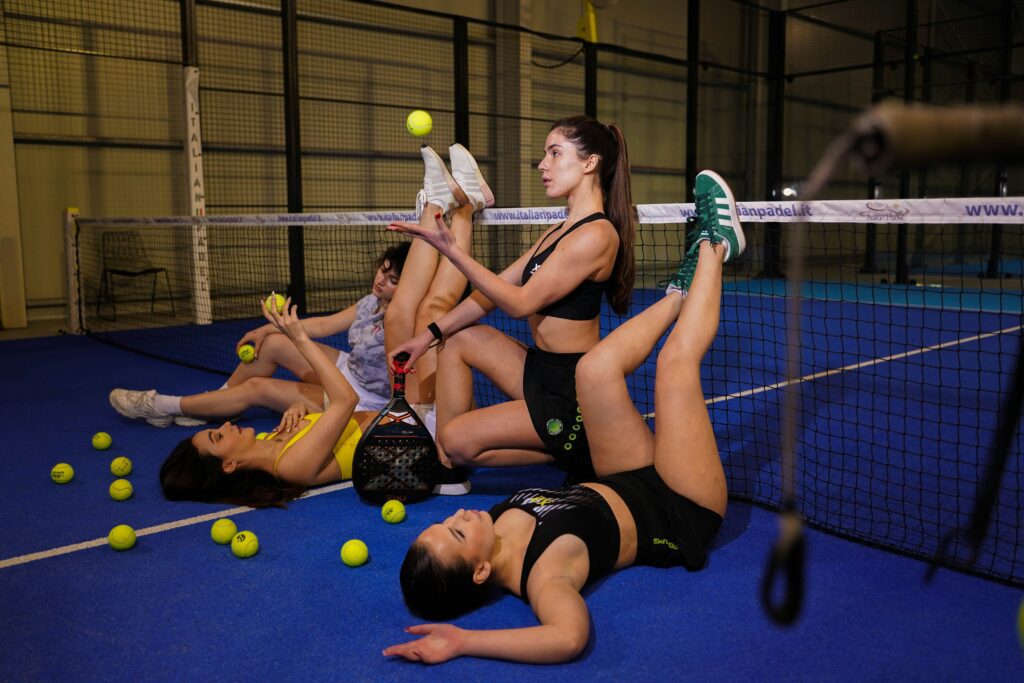
This isn’t about finding a running partner. It’s about what happens to your whole life when the people around you are already living the version of it you’re trying to build.
Can we just say it out loud for a second?
Motherhood can be oddly lonely.
Not in a dramatic, “I have no one” kind of way. But in a quieter way. You can be surrounded by people -baby groups, soft play, school gates, the same catch-ups on repeat – and still feel like no one really gets the version of you that wants to move, to plan things, to actually do something with your time.
You chat about naps, snacks, who’s not sleeping. And then you go home thinking: but where are the women who are actually up for doing things?
And even when you try – you book the class, you show up, you do the workout – it doesn’t always solve it. Because the second it finishes you’re rushing off for school pick-up, and there’s no real chance to connect. You’re technically around people and still doing it alone.
This is where active friendships change everything. Not because you need more people. But because the right people change the room you’re in – and the version of you that shows up inside it.
1. You Stop Relying on Motivation
When you’re doing everything alone, motivation carries far too much weight. You have to decide, initiate, push yourself, and follow through – every single time. In motherhood, where your brain is already running at capacity, that’s a significant ask.
When you have active friends, something shifts. Plans exist outside of you. A run is already happening. Someone is expecting you to show up. And suddenly it’s not about whether you feel like it – you just go.
There’s a well-documented principle in behaviour change around this: we are significantly more likely to follow through when other people are involved. Not because we’re weak, but because we’re wired for connection. Social reinforcement – knowing someone else is in it with you – is one of the most reliable consistency tools that exists. It isn’t less disciplined. It’s just smarter.
2. You Raise Your Standards Without Trying
This one is subtle but powerful.
When you spend time around women who move, plan, sign up for things, talk about races and trips and goals as if they’re a normal part of life – it starts to feel normal to you too. Not intimidating. Not extreme. Just what people like you do.
Psychologists call this environmental conditioning – the idea that our behaviours are heavily shaped by what’s modelled around us. Your environment sets an invisible standard, and you tend to rise to meet it without having to consciously force it. When the room changes, your sense of what’s possible changes with it.
You don’t have to work harder. You just have to be in the right room.
3. It Becomes More Fun – And That’s Not a Small Thing
We cannot skip this.
Because if it’s not enjoyable, it doesn’t last. Enjoyment is one of the strongest predictors of long-term exercise consistency – more than discipline, more than intensity. Research by Cecilie Thøgersen-Ntoumani and colleagues on exercise adherence has found repeatedly that intrinsic enjoyment – doing something because it feels good, not because you feel you should – is what drives sustained behaviour. Obligation gets you out the door a few times. Enjoyment keeps you going for years.
And people make things enjoyable in a way that solo training almost never can. You chat while you run. You laugh halfway through a walk. You share the ridiculousness of early starts and questionable kit choices. Movement stops being something you fit in and becomes something you look forward to. That shift is worth more than any training plan.
4. You Build Self-Belief Faster
There’s a concept in psychology called self-efficacy – essentially, your belief in your own ability to do hard things. And one of the most effective ways to build it isn’t just doing things yourself. It’s watching people like you do them too.
When another mum – someone who also has kids, a full schedule, a life that looks like yours – signs up for something, trains for something, follows through on something, it quietly rewrites what feels possible. It becomes: if she can do it, I probably can too. And that belief is often the difference between staying where you are and stepping into something bigger. Seeing yourself reflected back in someone else’s capability is one of the most underrated tools for growth.
5. You Finally Feel Like Yourself Again
This one is harder to explain, but you know it when you feel it.
There’s something about being around the right people that brings parts of you back online. You talk differently. You think differently. You remember what you care about. Because you’re not just operating as “mum” in those moments – you’re operating as you. The version of you that has opinions, energy, plans, ambition, a sense of humour that doesn’t revolve around whether anyone ate their dinner.
For many women, especially after years of pouring themselves into everyone else, that reconnection is significant. It’s not about escaping motherhood. It’s about expanding within it. Why you feel better after a run touches on this identity piece in more depth – it goes further than most people expect.
6. You’re No Longer the Only One Driving Everything
This one deserves more than a paragraph.
It is genuinely exhausting to be the person who always suggests things. Who makes the plans, does the research, picks the date, follows up when nobody responds, and then has to absorb the last-minute cancellations with grace because we’re all mums and we all understand.
And we do understand. Of course we do. Life is unpredictable and childcare is hard and everyone is doing their best.
But there is also a specific kind of soul-destroying weariness that comes from consistently being the one who tries, in a group of people who don’t try back. When you want a particular quality of life and you work hard to make it possible – for yourself and for the people around you – and it keeps not quite happening. The quiet realisation that your standards and the standards of the people around you are just different. And that nobody is wrong, exactly. But you keep ending up alone on the run you organised anyway.
Active friendships change that dynamic entirely. You’re surrounded by women who also suggest, also plan, also show up. There’s reciprocity. Shared momentum. You stop dragging energy into the room and start stepping into one that already has it. And that – just that – can feel like the deepest exhale you’ve had in years.
7. You Open Doors You Wouldn’t Have Walked Through Alone
Active friendships don’t just help you stay consistent. They expand what you’re willing to try.
You sign up for things you wouldn’t have done alone. You go places you wouldn’t have considered. Races. Trips. Events. The kind of adventures that feel too big or too ambitious or too logistically complicated when you’re thinking about them in isolation – but suddenly feel entirely doable when someone else says “I’ll do it too.”
And sometimes it goes further than that. Joint ideas. Shared plans. Opportunities that only exist because two people were already moving in the same direction. Forward-moving women have a way of creating forward momentum for the people around them, almost without trying. The loneliness of being the only active mum in your circle explores the other side of this – what it costs when that reciprocity is missing.
8. You Feel Less Alone
At the core of all of this is something very simple and very human.
We are not built to do life in isolation. And while motherhood offers connection in many forms, it doesn’t always offer alignment. You can be surrounded by people and still feel like you’re the only one who wants more.
Active friendships close that gap. They give you people who understand why movement matters to you – not because you’ve explained it, but because they already know. People who don’t question your standards or make you feel like your ambitions are inconvenient. People who are also, simply, up for it.
And that kind of connection doesn’t just support your habits. It supports your identity. The sense that the version of you who wants this – who still wants to do things, to go places, to build a life that feels expansive – is normal. Is good. Is worth building around.
A Final Thought
You don’t need hundreds of new friends. You don’t need a perfectly curated group.
Sometimes you just need one or two women who say: yes, I’m in.
Because from there, everything starts to shift. Your energy. Your consistency. Your confidence. Your sense of what’s possible.
You stop waiting for your life to change. And you start stepping into a version of it that already exists.
Move together. Laugh more. Raise the standard.
And obviously – do fun shit.
Come and Find Your People
The Active Happy Mum Club exists because every point in this post is true – and because the women who need this room deserve somewhere to find it.
Free. No pressure. No perfect plans. Just women who are already up for it.
Join the Active Happy Mum Club on Facebook →
Or find me on Instagram @activehappymumlife.
FAQs: Active Friends and Mum Life
Q: How do I find other active mums to exercise with? The most reliable approach is to put yourself in spaces where activity is already the default — running groups, parkrun, fitness classes with a social element, or communities built specifically around active motherhood. Self-selection does a lot of the work in those spaces; you’re already meeting people with a similar relationship to movement. The Active Happy Mum Club is built around exactly this, and the running groups near you post has practical suggestions for finding something local.
Q: What if my existing friends aren’t into exercise? It doesn’t have to be either/or. The active layer of your social life can exist alongside the friendships you already have – it doesn’t replace them. What it does is fill a specific gap that those friendships can’t. The goal isn’t to find one person who fits every part of your life. It’s to stop expecting the friends who aren’t active to become that, and instead find a separate community where it’s already the point.
Q: Is it really that different exercising with others versus alone? For consistency, genuinely yes. The research on exercise adherence consistently shows that social enjoyment and accountability are among the strongest predictors of long-term behaviour – more reliable than motivation or discipline. That doesn’t mean solo running has no value – many women find it essential for headspace. But having people to exercise with, even occasionally, changes the emotional texture of movement in ways that tend to make it stick far more reliably.
Q: I find it hard to make new friends as an adult – is it worth trying? Adult friendships are genuinely harder to form than they were earlier in life – the structures that used to create them (school, university, shared workplaces) are mostly gone. But activity is one of the most natural contexts for adult friendship because it creates repeated, low-pressure contact over time, which is exactly what friendship formation requires. You don’t have to force intimacy. You just have to keep showing up to the same run. The connection tends to build itself.
Q: What if I’m the slowest or least fit person in the group? Worth saying clearly: in most genuinely social running groups and active communities, pace matters far less than you expect it to from the outside. The women who show up consistently are far more interested in company than speed. And if you find a group where pace is used as a social filter, that’s useful information – it’s probably not the right room for you. The right room is the one where you can turn up as you actually are, not as you think you should be.
Read Next
Stop Waiting for Your Friends to Want More
The Loneliness of Being the Only Active Mum in Your Circle
How to Find Active Mum Friends Who Actually Show Up
Running Groups Near You: How to Find One That Fits
Why You Can’t Stick to Running (And What’s Actually Going On)


Be the first to comment