
The Blog

How Travel Made My Life Bigger in Motherhood
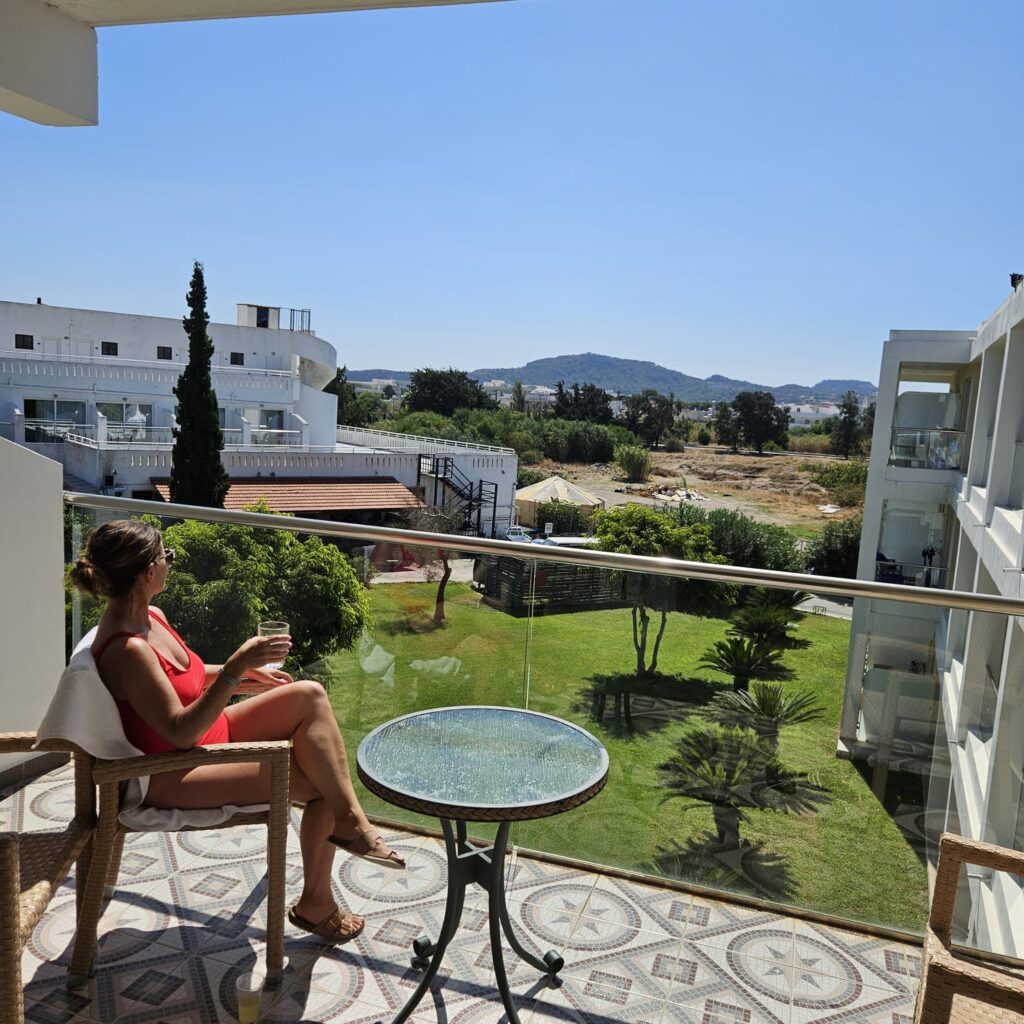
This isn’t really about holidays. It’s about what travel does to your sense of who you are – and why, in motherhood, that matters more than ever.
The Version of You That Shows Up Somewhere New
There’s a feeling most of us recognise. That moment at the end of a holiday when you don’t quite want to leave.
It’s easy to assume it’s about the sun, or the slower pace, or the break from routine. But if you really sit with it, it’s something else entirely. It’s the version of you that shows up there – a little lighter, a little more present, a little more like yourself.
And the question that tends to follow, quietly, on the plane home is: why can’t I feel like this more often?
The Places That Shape Us Don’t Really Leave
I spent a lot of time in Spain growing up, and even now it still feels like a second home. Not just because of the places, but because of who I became there.
It shaped decisions I didn’t even realise I was making at the time. I chose to study languages. I ended up living in Barcelona. I built parts of my identity in a culture that felt expansive, social and alive.
Travel didn’t just give me memories. It gave me direction.
Years later, I found myself returning with my daughter – taking her to Barcelona and Ibiza not just for a holiday, but to pass something on. A feeling. A rhythm. A way of living that feels just a little bigger.
When Life Starts to Feel Smaller Than It Should
Because if we’re honest, life without something to break it up can start to feel small. Not in a dramatic or obvious way, but subtly.
You’re doing all the right things, keeping everything moving, holding it all together – but the days can begin to blur. The same routines. The same pace. The same mental load.
And at some point, there’s often a flicker of awareness. A quiet thought that says: is this it?
That feeling – the life narrowing without you quite noticing – is something I’ve written about more in why motherhood shouldn’t make your life smaller. It tends to show up in different ways for different women, but travel is one of the clearest triggers for noticing it.
Why Travel Changes How We Feel (Not Just What We Do)
Travel interrupts that narrowing in a way very few things can.
There’s real research behind why it feels so powerful. A study by researchers at Columbia University, NYU, and the University of Miami found a strong link between novel experiences and mental health – exposure to new environments increases and strengthens neural pathways in ways that staying in a familiar environment simply doesn’t replicate. Your brain genuinely engages differently when everything around it is new.
A Cornell University study found that even the anticipation of a trip – the planning, the discussing, the imagining – boosts happiness and keeps the mind off daily stressors. And research published in the International Journal of Environmental Research and Public Health found that people felt better rested, less anxious, and in a noticeably better mood up to three days after returning home from a trip.
But beyond the research, the felt experience is simpler: travel pulls you out of autopilot. It makes you notice things again. And in doing that, it gives you back something that everyday life quietly takes away.
The Moment Everything Shifted for Me
For me, that shift became very real on a trip back to Ibiza – somewhere I hadn’t been in nearly twenty years.
Something in me didn’t want to experience it from the same place every day. I wanted to move through it, not just sit beside it. So I ran.
I’ve written about what that specifically felt like – and what packing my trainers means now – in why I always pack my running shoes on holiday. But the short version is: it changed the whole texture of the trip. Running became a way of experiencing the place rather than just occupying it. It took me through streets I wouldn’t have walked, along coastlines I wouldn’t have reached, into quiet early moments before the day began.
It made the trip feel richer, more immersive, more mine.
There’s a Bigger Way to Travel as a Mum
That experience made me realise that travel doesn’t have to feel small, either.
For a long time, our version of travelling as a family had defaulted to what felt easiest – all-inclusive, contained, predictable. And there’s absolutely a place for that. Some seasons of family life genuinely call for easy.
But we also realised it doesn’t have to be the only way.
There is a version of travel that doesn’t feel like parenting in a different location, but like living – just somewhere new. A version where movement fits naturally into the day, where you explore more, where things feel just a little more open. Where you come home feeling like you’ve added something to yourself rather than just recovered from the year.
The practical side of making that work – keeping running and movement part of a trip without it becoming rigid or stressful – is something I go into in how to keep running while travelling.
What Travel Actually Gives You
What travel gives you isn’t just a break from your life.
It gives you perspective on it. It reminds you that there is more out there than your current routine – and more ways to live than the one you’re currently in.
For me, it shaped my identity, reframed my relationship with movement, and brought back a sense of curiosity and energy that’s genuinely easy to lose in the day-to-day.
And if I’m honest, I feel the difference when it’s missing.
Life feels a little flatter. A little more contained. A little less expansive.
Why More Mums Need This (Without the Pressure)
That’s why I think more mums need this – not in a pressure-filled “book a big trip” kind of way, but in a permission-giving one.
Because there’s still a narrative that travelling with children has to be hard, stressful, or limiting. That it’s something to endure rather than enjoy. That your own experience of a place becomes secondary to managing everyone else’s.
And it just isn’t true anymore.
There are more options than ever – ways to travel that balance ease with experience, that support both family life and personal identity, that allow you to actually enjoy the trip rather than just survive it.
Travel makes life bigger. Not because of the places themselves, but because of what they unlock in you. More curiosity. More presence. More energy. More perspective.
And when you layer movement into that – even gently, even imperfectly – it amplifies everything.
You don’t just see where you are. You feel it.
A Final Thought
Life is short. And it can become small without us even noticing.
Travel is one of the most reliable ways to expand it again – to remind yourself, and your children, that there is more out there. More ways to live, more ways to feel, more ways to be.
And sometimes, all it takes is stepping slightly outside your usual rhythm and seeing what happens.
Come and Share Your Story
If you’ve ever had a moment where travel shifted something for you – even in a small way – I’d love to hear it.
Inside the Active Happy Mum Club, this is exactly the kind of conversation that happens. Women sharing stories, planning trips, building the active expansive lives they actually want – together.
Join the Active Happy Mum Club on Facebook →
Or find me on Instagram @activehappymumlife.
FAQs: Travel, Identity and Motherhood
Q: Why does travel feel so different when you’re a mum? Partly because the contrast is sharper. Everyday life in motherhood carries a particular kind of cognitive weight – the planning, the logistics, the constant background hum of everyone else’s needs. Travel disrupts that pattern in a way that almost nothing else does. New environments require different kinds of attention, which gives the usual mental load somewhere to rest. The research backs this up too – novel experiences genuinely change how the brain engages, in ways that familiar environments don’t replicate. What most mums are feeling at the end of a good trip isn’t just rest. It’s restoration.
Q: How do I stop feeling guilty about wanting to travel for myself and not just the kids? The reframe that tends to help most is this: the version of you that comes back from a trip where you felt like yourself – curious, energised, present – is a better mother than the one who stayed home and managed everything perfectly. Travel isn’t a self-indulgence that takes you away from your family. It’s one of the things that brings you back to yourself, which benefits everyone around you. Wanting it isn’t selfish. It’s self-aware.
Q: How do I keep my own sense of identity when travelling with young children? Small things make a significant difference – going for a run or a walk before the family day begins, choosing a destination with something in it for you as well as the children, keeping one thing in the day that’s yours. The goal isn’t to turn a family holiday into a solo trip. It’s to not completely disappear into logistics while you’re away. Even twenty minutes of movement in the morning, or a walk on your own before dinner, can change the quality of the whole trip.
Q: We always do all-inclusive family holidays. Is there a way to make them feel more expansive? Completely – and often it doesn’t require changing the destination. The shift usually comes from how you move through the place rather than where you are. Getting out before the day starts, finding one route to run or walk, choosing one morning to explore beyond the resort. Most all-inclusive resorts now have running routes, early morning classes, or at least safe paths to walk. The container doesn’t have to be limiting. It’s often just habit.
Q: Why do I feel flat after coming home from a holiday, even a really good one? Some of that is unavoidable – the return to routine after a period of novelty is a genuine physiological shift. But the particular flatness that comes after a trip where you felt most like yourself is often your nervous system registering the gap between how life felt there and how it feels here. That’s useful information. It’s worth asking what specifically felt better – the movement, the time outside, the absence of the usual mental load, the sense of doing something that was yours – and thinking about how to bring more of that into everyday life rather than waiting for the next trip.
Read Next
Why I Always Pack My Running Shoes on Holiday
The Active Mum’s Guide to Seeing the World Without Giving Up Movement


Be the first to comment