
The Blog

Is My Body Ready to Run After Having a Baby? (What You Actually Need to Know)
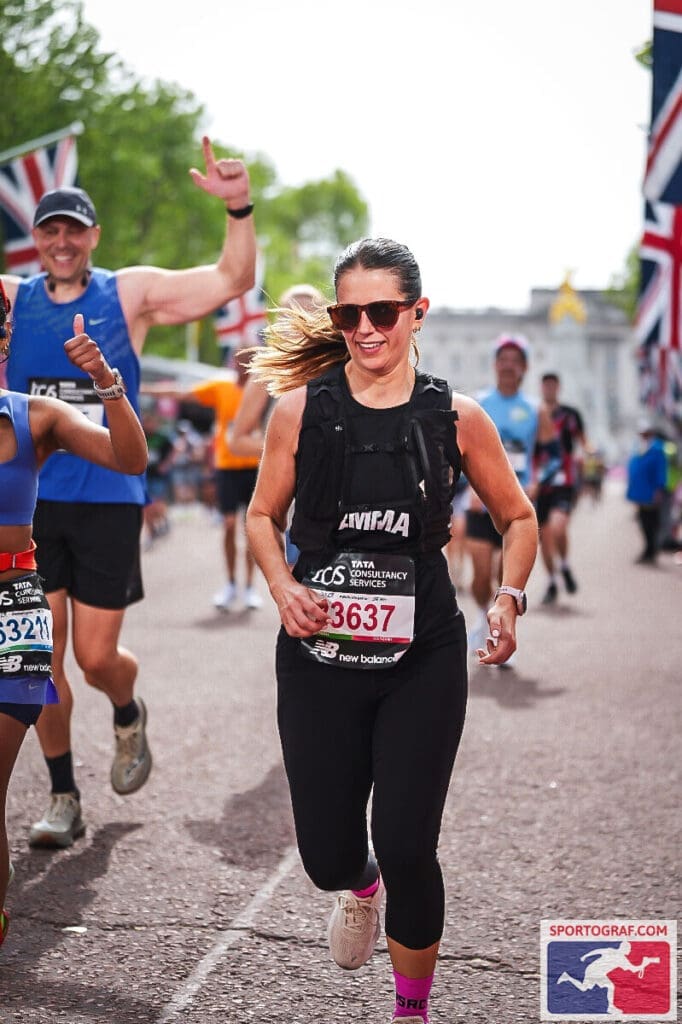
Wanting to run again after having a baby is one of the most normal things in the world. And yet it can feel surprisingly complicated – logistically, physically, and emotionally. This is the honest version.
There’s a question that sits underneath “is my body ready to run after a baby?” that most women don’t quite say out loud.
It’s not really about the body at all.
It’s: is it okay to want this right now?
Am I allowed to prioritise this, when there’s so much else going on? Is it selfish to carve out time for something that’s purely mine? And if I try and it goes wrong – if I can’t manage it, if it hurts, if I can’t get out the door – will that feel worse than not trying at all?
That’s the real question a lot of women are sitting with. And it deserves to be answered before we get anywhere near the physical stuff.
Yes. You are allowed to want this. Not eventually, not once everything else is sorted. Now.
Running postpartum isn’t a luxury or an indulgence. For a lot of women, it’s one of the first things that starts to feel like them again. And that matters – not just for you, but for the life you’re building around you.
What’s Actually Holding Women Back (And It’s Not Always the Body)
Before we talk about physical readiness, it’s worth naming the other things that get in the way – because they’re just as real, and far less talked about.
Confidence is one of the biggest. Your body has changed. It might feel unfamiliar, unpredictable, or just not quite yours yet. The idea of running – of being seen running, of attempting something physical – can feel exposing in a way it never used to.
Embarrassment comes up more than women admit. Worrying about leaking. Worrying about how you look. Worrying that you’ll have to stop after five minutes and someone will notice.
Practical barriers are real too. When do you go? Who’s with the baby? How do you feed before or after? What do you do if they won’t settle? A running buggy can be a genuinely useful solution here – it removes the childcare piece entirely and brings the baby into the experience rather than making running feel like something you have to steal time for.
And underneath all of it, often, is just the quiet fear that you’ll try and it won’t work. That you’ll discover running feels harder than it used to, or that your body doesn’t respond the way you remember, and that somehow that will mean something about who you are now.
It doesn’t. But we’ll come back to that.
The Benefits Nobody Leads With
Most of the conversation about running postpartum focuses on what you need to be careful about. Not enough of it focuses on why it’s genuinely worth coming back to.
Being outdoors changes everything. There is something about getting outside – even for twenty minutes, even slowly – that shifts the quality of a day in a way that staying in simply doesn’t. Light, air, movement, the absence of four walls. Postpartum life can feel very indoor and very contained. Running, even gentle running, punctures that.
Mood and anxiety. Running is one of the most evidence-backed interventions for anxiety and low mood that exists – and the postpartum period, with its hormonal shifts, sleep deprivation, and identity upheaval, is one of the times women are most vulnerable to both. A run doesn’t fix everything. But it does something real and consistent to how you feel, and the effect compounds over time.
Self-efficacy – doing hard things again. There’s something specific that happens when you do something physically demanding after having a baby. You remember that your body is capable. That you can set out to do something and complete it. That you are still someone who does things. That feeling -self-efficacy, in the research – has ripple effects into everything else. Confidence in your body, confidence in yourself, confidence as a mother.
Identity. This might be the most important one. Running, for women who have always run, is often tied up in who they are – not just what they do. Coming back to it after a baby isn’t just exercise. It’s a reclamation of something that feels like yours. Why you feel better after a run gets into this in more depth if it’s resonating.
The Misconceptions Worth Clearing Up
“I feel fine, so I must be ready.” Feeling okay is a good sign – but it’s not the whole picture postpartum. Your body can feel pain-free and still lack the underlying coordination and strength that running requires. This isn’t about being overly cautious. It’s about understanding that postpartum recovery has layers that aren’t always visible from the inside. Several of my clients – and honestly, me during my first pregnancy – felt completely fine and pushed back into running too quickly. The consequence usually doesn’t show up immediately. It shows up weeks or months later.
“The 6-week check means I’m cleared to run.” The 6-week GP appointment is a general health check, not a physical readiness assessment. Most GPs are not assessing your pelvic floor function, your abdominal wall, or your capacity for impact. Being signed off at 6 weeks means your general recovery is on track – it doesn’t mean your body is ready for repetitive high-impact loading. Running places between one and a half to two and a half times your bodyweight through your system with every step. That requires specific readiness, not just general health.
“Pain is the only warning sign.” It isn’t. Leaking when you run, jump or cough, a feeling of heaviness or dragging in the pelvic area, and a general sense that something doesn’t feel quite right internally – these are all signals worth taking seriously, even if they feel minor or occasional. Common doesn’t mean normal. And the absence of all symptoms still doesn’t guarantee that your body is ready for the load.
“A C-section means I’m already ahead – I didn’t give birth vaginally.” This one genuinely surprised me when I studied it. A C-section is major abdominal surgery. Your abdominal wall, your core, and your pelvic floor have all still been under significant load throughout pregnancy – regardless of how birth happened. The recovery timeline after a caesarean is often longer, not shorter, because it involves healing from surgery on top of the standard postpartum changes. I had a C-section and, had I not gone on to study women’s health, I genuinely would not have known that pelvic health work was still relevant for me. I would have assumed it was a vaginal birth issue and moved on.
My Own Experience (The Honest Version)
I did not do pelvic health work after my first pregnancy. I didn’t know I needed to. I assumed, like many women do, that it was something for people who had more obvious symptoms – and honestly, I didn’t have the knowledge then that I do now.
My first postpartum run was at 12 weeks after my son. It was ten minutes: five minutes walking, five minutes running – and “running” is a generous term. It felt enormous and small at the same time. Enormous because I’d done it. Small because I was very aware of how different it felt to the running I remembered.
What I didn’t fully appreciate then was the longer game.
Around six months in, the injuries started to creep in. Nothing dramatic – but a pattern of things that kept interrupting my consistency. What I understand now, having studied this properly, is that I had started running before I’d built the structural foundations to sustain it. I got out the door. I didn’t maintain the work that needed to run alongside the running.
That’s the part nobody tells you. It’s not just about whether you can start. It’s about whether you’ve got the support in place to keep going.
This is why I’d recommend looking into pelvic health work – not as a prerequisite that has to be perfectly completed before you’re allowed to run, but as something that runs alongside your return. I trained through the GGS Women’s Health Certification and Jen Dugard’s Safe Return to Exercise – and the thing both emphasised, repeatedly, was that the structural support piece is a ongoing practice, not a one-time box to tick.
In the UK, you can ask your GP for a referral to a women’s health physio on the NHS, or find a specialist through the Pelvic, Obstetric and Gynaecological Physiotherapy directory.
What This Actually Comes Back To
You wanting to run again after having a baby is not a vanity. It is not jumping the queue on recovery. It is not something to be squeezed in apologetically around the edges of everything else.
It is one of the most sensible, grounded things you can do for yourself in this season of life.
The goal is not to get back as quickly as possible. It’s to get back in a way that lasts – that holds up six months from now, a year from now, five years from now. Women who build that properly are the ones still running. Why you can’t stick to running is worth reading alongside this if the start-stop cycle is something you recognise – the physical and the psychological pieces are more connected than most people realise.
Come and Talk About This
If you’re navigating the return to running postpartum and it would help to be around women who are doing the same thing, this is exactly what the Active Happy Mum Club is for.
A free community. Honest conversations. No pressure, no perfect plans.
Join the Active Happy Mum Club on Facebook →
Or find me on Instagram @activehappymumlife – I’d love to hear where you’re at with it.
FAQs: Returning to Running After Having a Baby
Q: How do I know when I’m ready to run after having a baby? There’s no single moment where a green light switches on – and anyone who gives you a precise checklist is oversimplifying something genuinely individual. What I’d say is: listen to your body, take symptoms like leaking or pelvic heaviness seriously rather than pushing through them, don’t rely on the 6-week check as clearance for running specifically, and consider working with a pelvic health physio who can assess what you can’t see yourself. The emotional readiness matters too – if the idea of running feels more daunting than exciting right now, that’s worth sitting with before you lace up.
Q: When can I start running after a C-section? A C-section is major abdominal surgery, which means the recovery timeline is often longer than many women expect – typically not before 12 weeks at the earliest, and only once the abdominal scar tissue has had time to heal and regain function. I had a C-section and wouldn’t have known pelvic health work was still relevant for me had I not studied it. Most guidance suggests starting with walking, building to a consistent 30 minutes, and working with a pelvic health physio before introducing impact. How you feel on the surface is not always a reliable guide to what’s happening internally.
Q: What are the signs I’m not ready to run yet? The clearest signals are leaking urine when you run, jump, or cough; a feeling of heaviness, dragging, or pressure in the pelvic area; pain in the pelvis, hips, or lower back during or after movement; and a general sense that something doesn’t feel quite right internally. These are common postpartum experiences – but common doesn’t mean they should be pushed through. They’re your body communicating that it needs more time or more support before taking on impact.
Q: Is it normal for running to feel completely different after having a baby? Completely normal, and more common than women admit. Your body has been through enormous change – physically, hormonally, and in terms of sleep and recovery capacity. Running will often feel harder, heavier, or less fluid than before. That experience is almost universal among women returning to running postpartum, and it’s temporary. Building gradually, keeping early runs shorter than you think you need to, and giving your body time to find its rhythm again tends to be far more effective than trying to push back to where you were.
Q: Do I need to see a pelvic health physio before I start running again? I’d strongly recommend it – not as a gatekeeping step, but because they can assess things you genuinely can’t assess yourself. I skipped this after my first pregnancy because I didn’t know it applied to me after a C-section. I’d do it differently now. In the UK you can ask your GP for an NHS referral, or find a specialist through the POGP directory. If cost is a barrier, even a single assessment gives you useful information to work with.
Read Next
Why You Can’t Stick to Running (And What’s Actually Going On)
How Busy Mums Stay Consistent With Exercise


Be the first to comment